
Multi-Model AI Agents: 3 Questions to Ask Suppliers
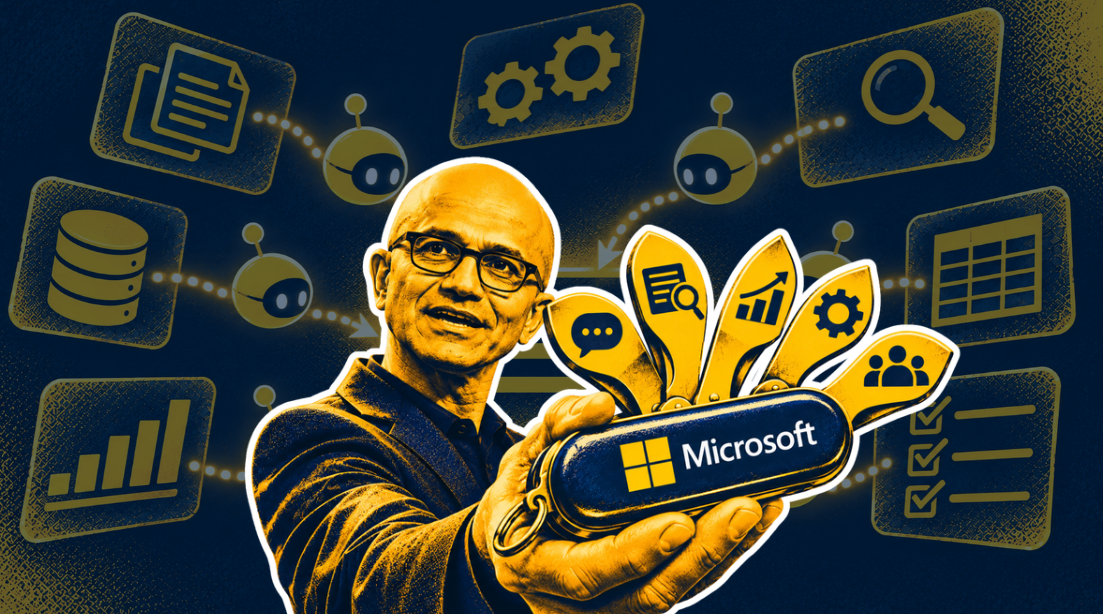
Multi-model AI agents can pick the best AI model for each task inside one workflow. Microsoft has just made that approach easier to buy.
On 28 October it announced the Microsoft Copilot harness, now available through Microsoft Foundry. Most businesses will meet it through a supplier instead of building anything, so the useful question is what to ask that supplier.
Microsoft's harness is built for developers
Microsoft's announcement describes the harness as 'everything around the model', meaning the instructions, context, execution environment and controls. GitHub's engineering team built it and Microsoft has adopted it company-wide.
From 28 October the harness is available through Microsoft Foundry, which Microsoft calls a fully managed way to build agents. The post says it supports 20+ frontier models plus bring your own key.
It can route work to the model best suited to each task. It also supports open standards such as MCP, agent skills and agent plugins.
Microsoft runs the agent loop and the sandbox. It says governance is built in.
The post targets developers and enterprise customers building their own agents. Its performance claims are Microsoft's own.
FourWeekMBA's analysis says using the harness is free until 1 December 2026, when consumption-based billing begins. Sandbox compute then costs $0.0994 per vCPU-hour and model inference costs extra. The same report says Foundry Agent Service is in public preview and reads the move as Microsoft selling the multi-model layer itself.
Multi-model AI agents let each task use the best model
In our view, many organisations pick one AI tool and fit every task to it. That is simple but costly, because the best model for drafting a client email may differ from the best model for checking a spreadsheet. A finance team might route forecast commentary to one model and client emails to another.
A multi-model approach lets a workflow route each task to a different model. Our post on which ChatGPT model to use shows how quickly model choice becomes a decision in its own right. Our review of what Claude Sonnet 5.5 means for your business shows the same pattern from another vendor.
Multi-model AI agents: three questions for your supplier
Whoever sells you an agent should answer these before you sign anything.
Which models will it use and who decides? Ask for the list, the rule for choosing between models and whether you can restrict the choice. An HR team, for example, should ask whether staff records could ever reach a model it did not approve.
What controls and records come with it? Microsoft says governance is built in. Ask to see it: who can approve actions, what is logged and how you review what an agent did. Our AI compliance support covers the oversight behind this.
What does it cost and how do we leave? Microsoft's own post gives no prices, so ask for a full monthly cost at your expected volume, including model charges. Ask too for the steps to move your instructions and tools elsewhere.
Is this relevant to a business without developers?
In our view, mostly not yet. Map a process before you buy an agent. The announcement targets developers and large customers.
Agent work needs clear processes before it needs clever technology. A business that cannot yet describe its own workflow gains nothing from a better engine.
The relevant step now is to prepare. Our AI governance post explains why rules and ownership give you an edge. Our guide to Microsoft Copilot training covers what to settle before any rollout.
If you are weighing always-on agents, our look at OpenAI Dots covers the same decision from the other side.
Agents suit businesses at the Committed stage
Agents belong at the Committed stage of our AI Confidence Journey, where a business has chosen its tasks and is deciding how to build. At Confused or Curious, start with the free readiness assessment or a workshop instead. As independent advisers who do not sell software, we have no stake in which model or supplier you choose.
Start by mapping one task
Pick one repeated task, write down each step and mark where a person must check the result. That map is what any agent supplier will ask you for. An AI roadmap puts such tasks in order against cost and return.
Frequently asked questions
What are multi-model AI agents?
They are AI agents that can use more than one AI model within a single workflow. Each step goes to the model best suited to it instead of to a single default.
What is the Microsoft Copilot harness?
Microsoft describes it as the layer around the model, covering instructions, context, execution and controls. It is available through Microsoft Foundry and targets developers and enterprise customers building agents.
Which models does the Copilot harness support?
Microsoft says it supports 20+ frontier models plus bring your own key. It can route each task to the model best suited to it.
Do businesses need multi-model AI agents now?
Most do not need them yet. A clear process, firm rules and a named owner matter more than model choice at the early stages.
Ask before you buy
Multi-model AI agents will reach most organisations through their suppliers, so ask the three questions above before you buy. A clear map of your own workflows makes those answers easy to judge.
Not sure where your plan for multi-model AI agents should start? Take our free AI readiness assessment: it takes two to three minutes, carries no obligation and gives you a readiness score with a personalised report.