7 World Model Use Cases That Could Change Your Business

The most practical world model use cases sit wherever work happens in physical space: warehouses, factories, building sites, shops and training rooms. Our view is simple. Two are usable today, while the other five will reach SMEs through suppliers over the next few years.
If you run a warehouse, a site or a shop floor, most AI headlines so far may have felt aimed at someone else's business. That is starting to change.
The thread running through all seven is physical AI: robots, vehicles and simulations that sense and act in the real world. World models give physical AI its grasp of cause and effect, predicting what happens next before anything moves. For the background, read our guide to AI world models and the next wave of AI.
Operations: World Model Use Cases for Moving and Making
These three sectors run on physical processes, which makes them natural early homes for world models.
1. Logistics and warehousing: test changes before the floor moves
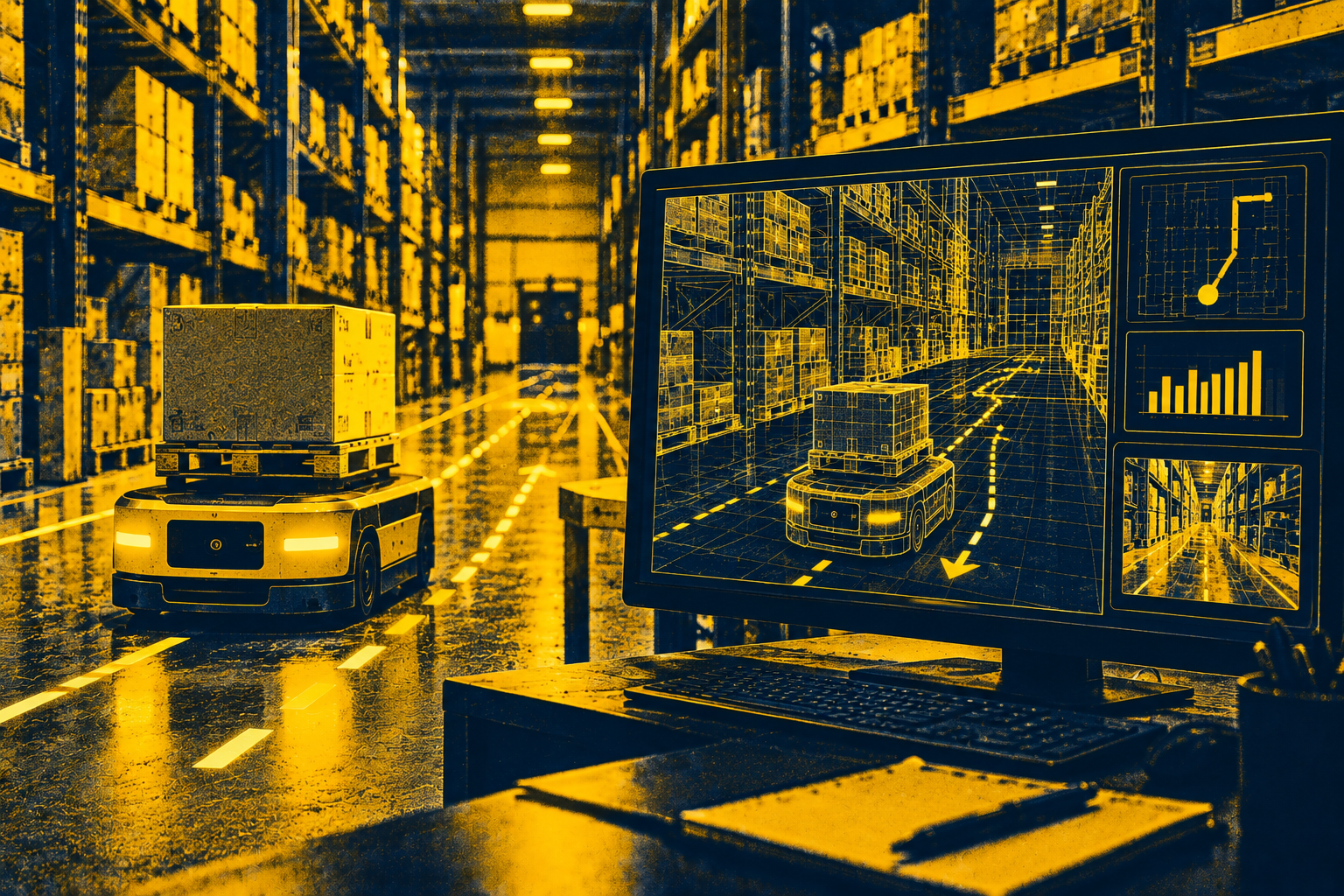
Changing a warehouse layout usually means disruption on the live floor. World models let a business test a new layout, a new robot fleet or a peak season surge in simulation before changing anything real.
NVIDIA's Mega blueprint shows the direction. Materials handling group KION use it to build warehouse digital twins and train robot fleets before they reach a real facility. For most SMEs, the benefit will arrive through suppliers who use this kind of simulation to plan and price your automation.
2. Manufacturing: rehearse the line before it runs
Manufacturers can use world models to rehearse a new production line, predict how a robot arm handles an unfamiliar part or find bottlenecks before they cost money. Large manufacturers already build on the technology, with NVIDIA's Cosmos 3 announcement naming Doosan Robotics, LG Electronics and Samsung Electronics among the companies building on its Cosmos platform.
Smaller manufacturers can start with the data that feeds these systems. When we helped a Midlands manufacturer with predictive maintenance on their production lines, sensor data and historic maintenance records cut unplanned downtime by 35% in the first six months.
3. Construction: plan safer sites in simulation
Construction has the most room to grow. According to the Office for National Statistics, only 13% of construction firms with ten or more employees use AI, compared with 58% in information and communication.
World models could close that gap by simulating sites, sequencing deliveries and testing how plant machinery moves around workers before a shift starts. In our view, safety planning is the strongest early case.
Good data comes first. Our work forecasting inventory demand for a construction supplier cut stockouts by 30% within three months.
Spaces: World Model Use Cases for Shops and Property
These two use cases are the closest to ready, because the tools already exist and need no robots.
4. Retail layout planning: walk the refit before you pay for it
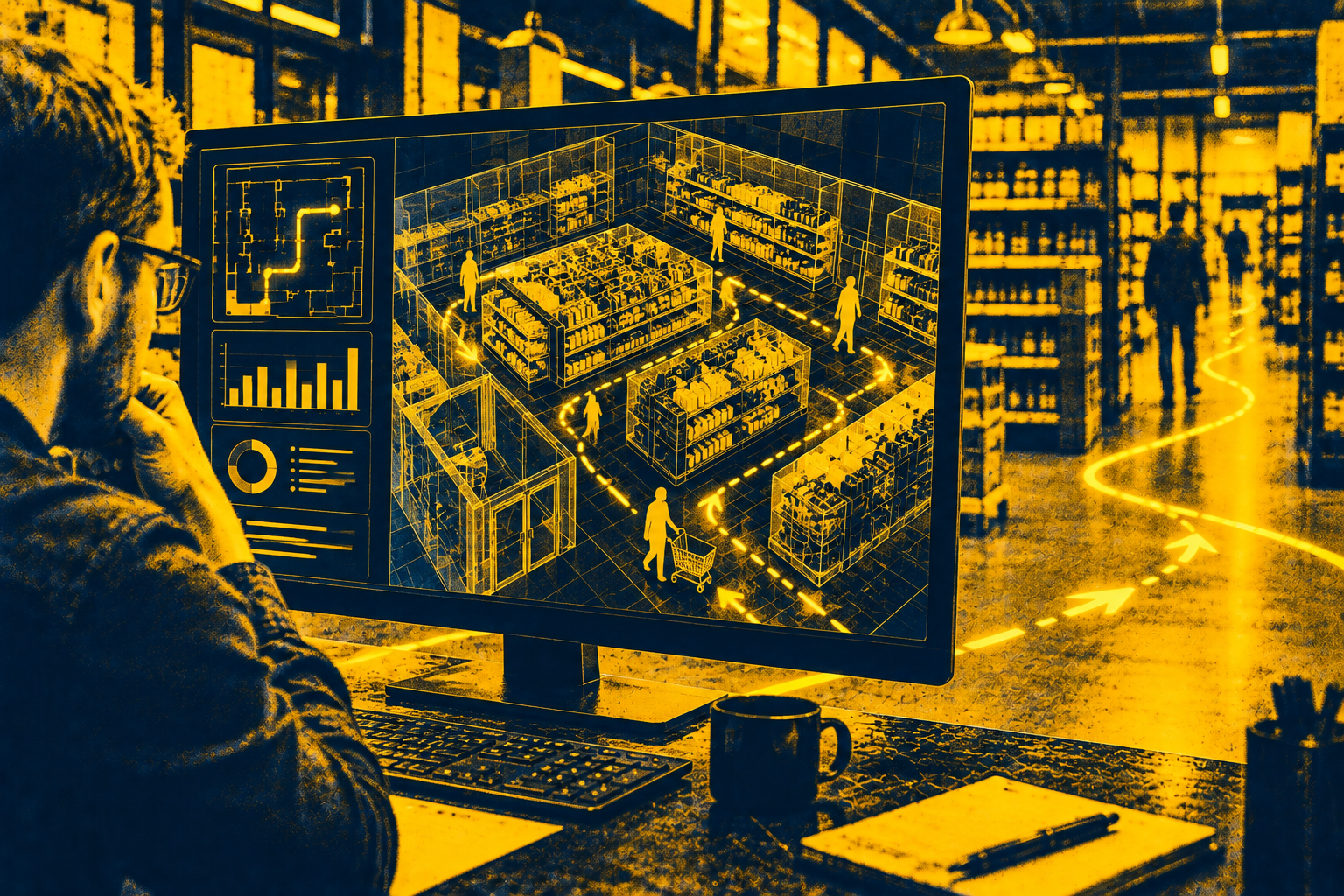
Every store refit is a gamble until customers walk through it. World models can generate a walkable 3D version of a shop floor. Teams can then test shelving, signage and customer flow before a single fixture moves.
World Labs' Marble already builds 3D worlds from text, images, video or rough 3D layouts. Anyone can sign up. We expect independent retailers planning a refit or a new branch to find this one of the easiest places to start, alongside the wider uses of AI in retail.
5. Property and design visualisation: sell spaces that do not exist yet
Estate agents, architects and interior designers often pitch before anyone lays a brick. Marble exports worlds as meshes, Gaussian splats or video. A floor plan or a handful of photos can become a walkthrough a client explores on screen.
In our view, the commercial gain is speed: faster visuals for pitches, planning conversations and off-plan sales. A human still needs to check every measurement.
People and Products: World Models for Training and Testing
The last two use cases replace expensive real-world practice with simulation.
6. Staff training: practise the risky moments safely
Google DeepMind say their Genie 3 model 'could create new opportunities for education and training, helping students learn and experts gain experience'.
Picture a forklift driver practising a near miss or a shop team rehearsing a busy Saturday, inside a world that reacts to what they do. Once built, that kind of training costs little to repeat and puts nobody at risk.
7. Product testing: prove it virtually before you build it
Testing a physical product in the real world is slow and expensive. NVIDIA built Cosmos to generate photoreal, physics-based synthetic data, such as driving scenarios and warehouse environments. Uber and Figure AI were among the first to adopt it, while NVIDIA said Wayve were evaluating it to find rare driving scenarios for safety testing.
For SMEs that design physical products, from e-bikes to packaging machinery, virtual testing could shorten the route from prototype to launch.
Which World Model Use Case Should You Watch?
The obvious objection is timing. Most of these tools still need specialist teams. Few SMEs will buy a world model directly this year.
We agree, which is why the smart move now is preparation. Map which of the seven areas touch your operations, collect clean data on them and ask suppliers how their roadmaps use world models.
In our view, construction and logistics firms have the most to gain, because the gap between today's AI tools and their daily work is widest.
Frequently Asked Questions
What are the main world model use cases for SMEs?
The strongest early cases are logistics, manufacturing, construction, retail layout planning, property visualisation, staff training and product testing. Each involves physical spaces or objects, where world models predict what happens next.
What is physical AI?
Physical AI describes systems such as robots and autonomous vehicles that sense and act in the real world. World models give these systems a way to predict the results of an action before they take it.
When will SMEs be able to use world models?
Some tools, such as World Labs' Marble, are available now for visualisation. In our view, most operational uses will reach SMEs through equipment and software suppliers over the next few years.
Find Your First World Model Use Case
Where you start depends on where your operations meet the physical world. If you sit at the Curious stage of the AI confidence journey and want to see what is possible, a structured session will take you further than another headline. Sophie Delroy, Managing Director at Build Group, called our LUMA framework 'a really engaging way to breakdown our current set-up and objectives'.
Book an AI Workshop to find the world model use cases that fit your business. In half a day to a full day, your leadership, operations and finance teams leave with a clear report of findings and key objectives.