World Models for SMEs: What to Actually Do Now

The right plan on world models for SMEs is short: get more from the AI you already use, organise the physical data you already collect and ask your suppliers what is coming. In our view, very few smaller businesses need to buy a world model this year.
If the headlines have left you worried that you are already behind, the data says otherwise. According to the Office for National Statistics, only 28% of businesses with fewer than ten employees use any AI technology at all. This five-step plan closes our campaign on world models, which started with our guide to AI world models and the next wave of AI.
Step 1: Get Value From the AI You Already Have
Language models come first because they pay back today. The same ONS survey found large language models were the most widely used AI technology among businesses with ten or more employees in June 2026, at 18%.
Adoption is also shallow. The ONS found that adopting businesses with ten or more employees use only around 1.6 AI technologies on average, up from around 1.4 in late 2023.
Pick one process that eats staff time, such as quoting, reporting or customer emails. Build an LLM into that process this quarter and measure the hours it saves.
In our view, the habits you build with LLMs now will carry straight into world model tools later. Clear prompts, clean data and sensible rules on what staff can upload apply to both.
Step 2: Work Out Whether World Models Matter to Your Sector
World models affect physical work first. The ONS figures show the gap clearly: AI use reaches 58% among information and communication businesses but only 13% in construction.
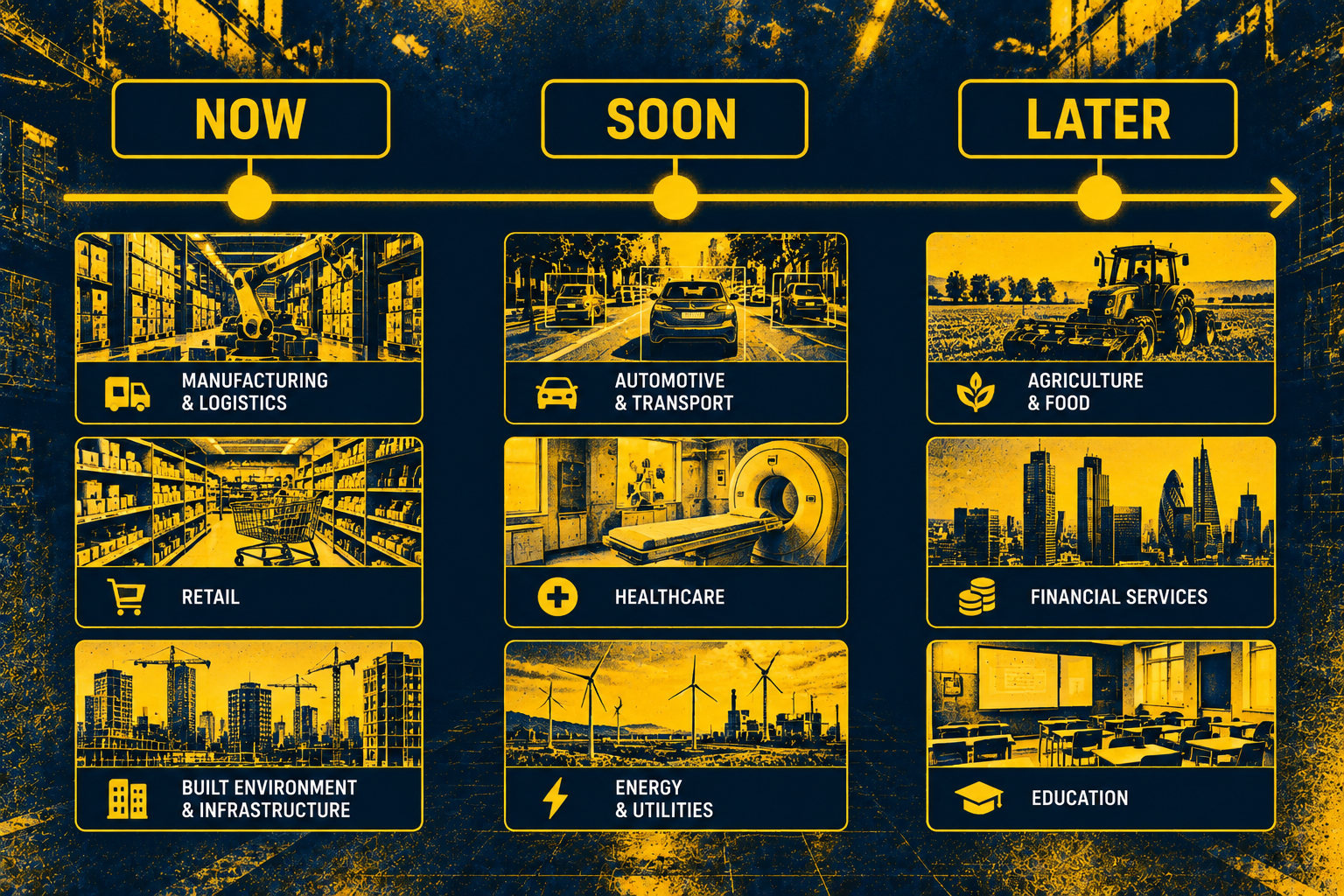
World models for SMEs: our sector timelines
Our timelines below are our view, based on where the tools stand today.
Property, architecture, interior design and retail can act now. Tools such as World Labs' Marble already turn text, images and video into explorable 3D spaces for walkthroughs and refit planning. Start with a free plan and one real project.
Logistics, manufacturing and construction should watch closely over the next one to three years. Their equipment and software suppliers are the most likely route in, through simulation, robotics and site planning tools.
Professional services, finance and other desk-based firms can wait. For them, world models will matter mainly as a feature inside tools they already use, such as 3D visuals in presentation or design software.
Step 3: Get Your Data and Processes Ready
World models learn from video, images and sensor data. The businesses that benefit first will be the ones that already capture that data in a usable form.
Start with what you have: machine logs, maintenance records, stock movements, floor plans and site photos. Store them in consistent formats, with dates attached, somewhere you can export them.
When we helped a Midlands manufacturer with predictive maintenance, sensor data and historic maintenance records cut unplanned downtime by 35% in the first six months.
Data only pays off when a process uses it. A construction supplier we worked with cut stockouts by 30% within three months once their demand forecasting drew on historical sales, project timelines and seasonal trends.
Step 4: Ask Your Suppliers Three Questions
Most SMEs will meet world models inside someone else's product. That makes supplier conversations your cheapest source of intelligence.
First, ask whether world models or simulation feature on their product roadmap. The answer tells you when the technology will reach your operations and at what price.
Second, ask where your data goes if you share it with them. Operational data can train models. You need to know who benefits from yours.
Finally, ask how easily you could switch to a rival if a better tool arrives. Lock-in is the quiet cost of adopting early.
Step 5: Set Rules Before Your Team Experiments
Some staff will try world model tools before you have a plan. Our guide to shadow AI explains why unapproved tools create data risks.
Agree what can and cannot go into these tools, such as client photos, site plans or product designs. Our AI policy guide sets out what to put in place first. Even one named person who approves new tools is better than none.
Should You Simply Wait?
The obvious objection is that the technology is early. Waiting, the argument goes, costs nothing. For buying decisions, we agree.
Data is different. Records you start capturing properly this year become the training material and evidence base for every AI tool you adopt later. Waiting on that step costs time you cannot recover.
Frequently Asked Questions
Should my small business invest in world models now?
For most SMEs, no. Invest in getting value from existing AI tools and in organising your operational data. Property, design and retail firms can test low-cost tools such as Marble today.
When will world models affect SMEs?
In our view, visual tools affect some sectors now, while operational uses in logistics, manufacturing and construction will arrive through suppliers over the next one to three years.
Which industries will world models affect first?
Industries built on physical work, including logistics, manufacturing, construction, property and retail. Desk-based sectors will feel the change later and mostly through software they already use.
Do I need a separate world model strategy?
No. Treat world models as a watch item inside your wider AI plan and review them once or twice a year as the tools mature.
The First Step on World Models for SMEs
World models for SMEs start with knowing where you stand on AI today. If you do not know where to begin, you sit at the Confused stage of the AI confidence journey, which is exactly where this plan begins. Jon Rew, Managing Director at Scimitar Sports, said 'we learned a lot from the AI Readiness Assessment'.
Take our free AI Readiness Assessment, the first step we recommend on world models for SMEs. It takes two to three minutes and gives you a personalised report with your AI readiness score, which you can then take into an AI Workshop with your team.