
Musk OpenAI Lawsuit: Why the April 27 Trial May Reshape AI
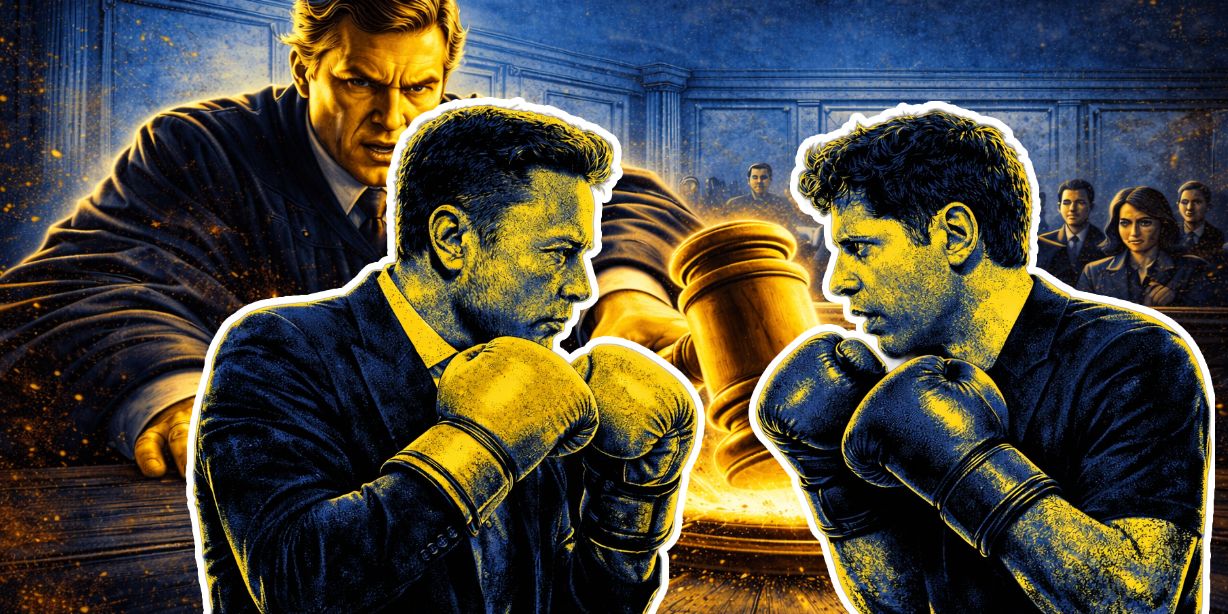
The Musk OpenAI lawsuit is being dismissed by most people as a billionaire grudge match. Two egos, one bitter falling out, a $150 billion damages figure designed for headlines. Easy to scroll past. That is exactly what OpenAI wants you to think.
The reality is that when jury selection begins on April 27, 2026 in Oakland federal court, a jury is going to decide something far more consequential than whether Elon Musk gets his money back. They are going to decide whether you can legally take billions in nonprofit donations, use them to build the most valuable technology in human history, and then quietly convert that nonprofit into a for-profit company valued at over $840 billion.
If the answer is no, the entire AI industry has a problem and every business using AI needs to understand why.
Musk OpenAI Lawsuit: What’s Actually on Trial
The facts are straightforward. In 2015, Elon Musk co-founded OpenAI as a nonprofit alongside Sam Altman, Greg Brockman and others. Musk contributed approximately $44 million in early funding based on explicit assurances that OpenAI would remain a nonprofit dedicated to developing artificial general intelligence for humanity’s benefit. He left in 2018 after failing to convince the board to merge OpenAI with Tesla.
Seven years later, OpenAI completed its conversion from a nonprofit to a for-profit company in October 2025. Following a $110 billion funding round in February 2026, the company reached a post-money valuation of approximately $840 billion. Microsoft holds a 27% stake after investing $13.75 billion, with intellectual property rights running through 2032. An IPO targeting over $852 billion is planned for late 2026.
Musk sued in 2024, alleging he was “assiduously manipulated” and “deceived” into donating based on promises the defendants never intended to keep. US District Judge Yvonne Gonzalez Rogers ruled in January 2026 that there was “ample evidence” for the case to proceed to a jury. The central piece of that evidence: a private diary entry from co-founder Greg Brockman, written in 2017, containing the phrase “it was a lie”. Add to that internal emails, Altman texts, and communications from Microsoft CEO Satya Nadella showing awareness of OpenAI’s evolving commercial plans, and you have the kind of paper trail juries understand.
In April 2026, Musk amended his complaint. He now seeks $150 billion in damages directed entirely to OpenAI’s charitable arm, with zero dollars to himself personally. He also wants Altman and Brockman removed from their positions and the for-profit conversion unwound entirely. OpenAI responded by writing to the California and Delaware attorneys general asking them to investigate Musk for “anti-competitive behaviour”. They publicly accused him of coordinating with Meta’s Mark Zuckerberg to undermine the company. That is not the response of a defendant confident in its case.
A note on balance. A recent New Yorker investigation reported that Musk himself pushed for majority control of a for-profit OpenAI as early as September 2017, which directly contradicts his current framing as the defender of the nonprofit mission. OpenAI’s lawyers will hammer this point in court, and the jury will have to weigh it. The outcome is genuinely uncertain.
Why the Musk OpenAI Lawsuit Matters Beyond OpenAI
Here is the part most coverage misses. OpenAI is not the only AI company built on nonprofit or public-benefit mission language.
Anthropic was founded in 2021 by former OpenAI employees who left over concerns about the company’s direction. Its public benefit corporation structure and safety-focused mission echo the same moral framing OpenAI used to attract early donors, talent and regulatory goodwill. xAI, ironically founded by Musk himself, pitches itself as building AI “for humanity”. Every frontier AI lab has used some version of this positioning to raise capital, recruit researchers and secure favourable treatment from governments.
If a jury in Oakland decides that OpenAI’s conversion from nonprofit to for-profit constitutes fraud, the precedent becomes industry-wide. Every AI company that positioned itself as mission-driven while commercialising aggressively becomes potentially vulnerable to shareholder suits, donor clawbacks, and regulatory scrutiny. The legal foundation of the AI boom, the idea that you can raise money on public interest grounds and later restructure for private gain, gets tested in court for the first time.
For businesses, this is not abstract. The largest AI companies in the world, the ones whose tools sit inside your business operations, whose APIs power your software, whose models inform your decisions, are suddenly exposed to structural legal risk. And the timing could not be worse for OpenAI. A jury verdict that even partially sides with Musk in late April or May would crater the IPO runway, complicate the Microsoft partnership, and send shockwaves through every major AI investor on Earth.
What This Means for SMEs Using AI
Two specific risks emerge from this, and both require attention regardless of how the trial ends.
Vendor Risk: Your AI Provider Might Not Look the Same in Six Months
If you have built any part of your business on OpenAI’s tools, APIs or partnership ecosystem, the Musk OpenAI lawsuit is a vendor stability problem. A jury verdict that forces the unwinding of the for-profit conversion would not just delay the IPO. It would throw the entire Microsoft partnership into question, restructure how OpenAI operates, and potentially affect the availability, pricing and support of every product the company offers.
This is not a hypothetical. We covered a similar dynamic in our blog on Microsoft ditching OpenAI, where Microsoft began building its own frontier models specifically because relying on OpenAI had become too risky even for the world’s largest enterprise AI buyer. If Microsoft is hedging, SMEs building strategies around OpenAI tools should be asking harder questions.
The lesson is vendor flexibility. The businesses that will weather whatever comes out of the Oakland courtroom are the ones whose AI strategies are not locked into any single vendor’s long-term stability. This is exactly the kind of strategic consideration an AI Roadmap is designed to address, identifying where vendor dependency creates risk and building in the flexibility to adapt as the landscape shifts.
Industry Precedent: Every Mission-Driven AI Company Becomes Vulnerable
The second risk is broader. If Musk wins even partially, the precedent affects how every AI company is structured, governed and regulated going forward. Anthropic, xAI, emerging labs and frontier research organisations all face increased scrutiny on whether their mission statements were genuine commitments or marketing language to attract favourable treatment.
This matters for SMEs in three ways. First, AI companies facing new legal or regulatory pressure will pass those costs on through pricing changes, support reductions or product restrictions. Second, the landscape may consolidate further around the few players who can absorb regulatory risk, reducing competition and raising prices. Third, AI Compliance considerations become more complex as governance standards evolve in response to whatever the Oakland jury decides.
None of this means panicking or delaying AI adoption. It means adopting with eyes open. The businesses making smart AI decisions right now are the ones who understand that the industry is not settled, that vendors will change, and that structural stability matters as much as current capability.
The Bigger Pattern: AI Is Still Finding Its Feet
The Musk OpenAI lawsuit sits within a broader pattern we have tracked across our recent coverage. Nvidia is consolidating the AI infrastructure layer beneath every model provider. Apple is putting Google’s Gemini inside 2.2 billion iPhones. AI agents like OpenClaw are reshaping how work gets done and now the legal foundation of the AI industry is about to be tested in court for the first time.
For SMEs, the pattern is clear. The AI landscape in 2026 is not a settled market where you pick a winner and commit. It is an actively restructuring industry where vendors shift, governance changes, and the rules are still being written. Businesses that plan for that reality will thrive. Businesses that assume today’s AI leaders will be tomorrow’s are taking on more risk than they realise.
This is why every AI investment should start with an AI Readiness Assessment and an AI Workshop. Not because you need to predict the outcome of the Oakland trial, but because you need a plan that works regardless of how it ends.
The Bottom Line
The Musk OpenAI lawsuit is not celebrity drama. It is the first real legal test of whether the AI industry’s moral framing holds up under scrutiny, and the verdict will affect every business using AI tools built by mission-driven labs.
If Altman wins, the status quo continues and AI consolidates further. If Musk wins, the entire industry faces a reckoning on governance, structure and vendor stability. Either way, SMEs need an AI strategy that is not dependent on any single vendor’s long-term survival.
Complete our free AI Readiness Assessment to understand where your business sits in a fast-changing AI landscape, and how to build a strategy that survives whatever happens in Oakland.
%20(1).png)
%20(1).png)
%20(1).png)