
Microsoft Ditching OpenAI: What This Seismic Shift Means for Your Business
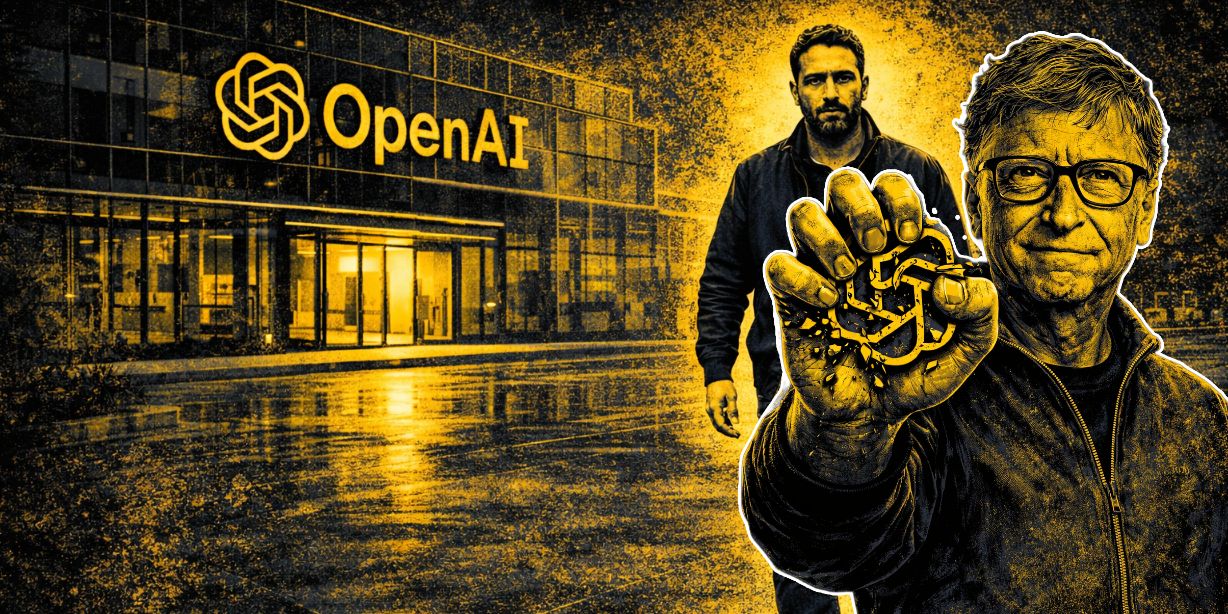
Microsoft ditching OpenAI has put a tectonic shift on the AI landscape as the organisation’s largest investor and strategic partner plans to move away from one of AI’s leading brands.
Microsoft has confirmed plans to build its own frontier AI models, which is a dramatic pivot away from its $13 billion partnership with the ChatGPT maker.
‘We have to develop our own foundation models, which are at the absolute frontier,’ said Microsoft AI chief Mustafa Suleyman in a recent interview with the Financial Times.
This isn't just corporate restructuring either, it's a warning shot that should concern every business leader building their AI strategy around major vendor partnerships. For executives and business owners exploring AI adoption, this development raises critical questions: What happens when your AI vendor relationship crumbles? How do you protect your investment? And what does this chaos at the top of the AI food chain mean for your organisation's AI roadmap?
Microsoft Ditching OpenAI: What's Really Happening
The relationship between Microsoft and OpenAI has been unraveling for months but Suleyman's public acknowledgment makes the divorce official. Microsoft isn't just hedging its bets either, it's building MAI-1, a frontier-level model designed to compete directly with OpenAI's GPT offerings.
The numbers tell the real story of this breakdown:
• Microsoft spent $37.5 billion on capital expenditures in the last quarter alone, with 66% dedicated to AI infrastructure
• 45% of Microsoft's massive $625 billion revenue backlog depends on OpenAI
• The company lost $357 billion in market value in a single day, partly due to investor concerns about OpenAI dependency
After restructuring their partnership in October 2025, Microsoft now holds a 27% equity stake in OpenAI but with significantly reduced profit-sharing. The message is clear: Microsoft is preparing for a future where it controls its own AI destiny.
The Financial Reality at OpenAI
OpenAI's financial situation helps explain why Microsoft is backing away. Despite generating approximately $20 billion in annualized revenue, OpenAI is hemorrhaging cash at an unprecedented rate:
• Projected loss of $14 billion in 2026
• Expected cumulative losses of $115 billion through 2029
• Only 5% of ChatGPT's 800 million users pay for the service
• Burning through capital faster than any start-up in history
This financial pressure led OpenAI to introduce advertisements into ChatGPT, a move that triggered internal rebellion and exposed deeper cracks in the company's foundation.
Why Microsoft Is Ditching OpenAI for In-House Models
Microsoft's decision to develop proprietary AI models stems from three strategic imperatives:
Control and Independence:
Relying on OpenAI means Microsoft's $37.5 billion quarterly AI investment is tied to a partner facing existential financial challenges. Building MAI-1 gives Microsoft sovereignty over its AI future.
Financial Exposure:
With nearly half of Microsoft's revenue backlog dependent on OpenAI, the risk became untenable. This diversification is about survival.
Competitive Positioning:
As OpenAI faces mounting criticism over advertising influence and internal turmoil, Microsoft needs clean, controlled alternatives to maintain enterprise trust.
The Warning Signs: An Engineer's Departure
The same day OpenAI began testing advertisements in ChatGPT (February 11, 2026) researcher Zoë Hitzig resigned in protest. Her departure and subsequent New York Times op-ed titled, ‘OpenAI Is Making the Mistakes Facebook Made. I Quit’ sent shockwaves through the AI community.
Advertising's Influence on AI Results
Hitzig's concern wasn't about direct manipulation of AI outputs, it was something more insidious. She warned that advertising creates powerful financial incentives that could lead to, ‘manipulating users in ways we don't have the tools to understand’.
The issue is ChatGPT's unprecedented access to intimate user data. Unlike traditional search engines, conversational AI sees:
• Your unfiltered thoughts and questions
• Personal challenges and decision-making processes
• Business strategies and confidential information
• Real-time context about your goals and vulnerabilities
When advertising revenue becomes a priority, the temptation to subtly steer conversations toward sponsored products or services becomes overwhelming, even if unintentional.
The fact that OpenAI needs advertising at all - despite $20 billion in revenue - reveals the unsustainable economics driving these decisions. Hitzig saw where this leads and walked away. Microsoft is now following her example, just with a $13 billion severance package.
What This Means for Your Business
If Microsoft, with all its resources, technical expertise and $13 billion investment, can't rely on OpenAI for long-term AI strategy, what does that mean for your organisation?
Dependency Risk in AI Partnerships
The Microsoft-OpenAI split exposes a critical vulnerability in how businesses approach AI adoption: vendor dependency. Many organisations are building their entire AI infrastructure on platforms that may not exist in their current form five years from now.
Consider these warning signs from the OpenAI situation:
• Unsustainable business models forcing rushed monetisation
• Internal turmoil leading to key talent departures
• Fundamental conflicts between user interests and revenue pressure
• Major partners building exit strategies
Your business needs an AI strategy that protects you from these risks while still leveraging cutting-edge capabilities. That balance starts with understanding your actual AI readiness and building resilience into your approach from day one.
How to Build AI Resilience in Your Organisation
The Microsoft-OpenAI breakdown offers three critical lessons for businesses building AI strategies:
1. Never bet everything on a single vendor.
Microsoft learned this lesson the hard way. Your AI architecture should allow for flexibility and migration options.
2. Understand the business model.
If your AI provider is losing billions annually, their priorities will shift. Financial instability eventually affects service quality, pricing and feature development.
3. Start with assessment, not implementation.
Before committing to any AI platform, understand your organisation's actual readiness, requirements and risk tolerance.
Starting with an AI Readiness Assessment
The chaos in the AI industry makes one thing abundantly clear: rushing into AI adoption without proper assessment is a recipe for expensive mistakes. Before selecting vendors, tools, or platforms, you need to understand where your organisation actually stands.
Our free AI Readiness Assessment helps you evaluate:
• Your current data infrastructure and quality
• Team capabilities and skill gaps
• Governance and compliance requirements
• Cultural readiness for AI transformation
This assessment provides a clear view of your starting point, helping you avoid the trap of building on unstable foundations. It's the difference between reactive AI adoption and strategic AI integration.
Developing Your AI Strategy
Once you understand your readiness, the next step is developing a strategy that builds resilience against vendor uncertainty. This requires both immediate tactical planning and long-term strategic thinking.
Our AI Workshop works with your leadership team to identify specific use cases where AI delivers genuine business value, not just technological novelty. We help you understand how AI fits into your existing workflows, what changes are required and where the quick wins live alongside the transformational opportunities.
From there, our AI Roadmap service creates a comprehensive strategy that includes:
• Phased implementation timelines with clear milestones
• Governance frameworks that protect against vendor risk
• Compliance requirements specific to your industry
• Team training and capability development
• ROI metrics and success measures
• Risk mitigation strategies for technology and vendor changes
This roadmap ensures you're not just reacting to the latest AI trend, but building sustainable competitive advantages that can adapt as the technology landscape evolves.
Implementation Without Vendor Lock-In
The final piece is actual execution. This is where most organisations either create flexibility or trap themselves in vendor dependencies.
Our AI Development and AI Implementation services focus on building solutions with strategic awareness. We design architectures that can leverage multiple AI providers, maintain data sovereignty and allow for technology substitution without complete rebuilds.
This approach means that if your primary AI vendor encounters financial trouble, introduces problematic features like advertising or simply fails to keep pace with competitors, you have options. You're not locked into a sinking ship because someone sold you on a single platform solution.
Microsoft can afford to build MAI-1 from scratch, most businesses can't but with proper architecture from the start, you can build resilience into your AI systems without Microsoft's budget.
The Bottom Line: Don't Wait for Your AI Vendor to Fail
Microsoft ditching OpenAI isn't just industry gossip, it's a wake-up call for every business building AI strategies. The world's most sophisticated tech company couldn't make exclusive vendor dependency work, despite billions in investment and deep technical integration.
The lesson isn't to avoid AI. The lesson is to build AI resilience from day one.
OpenAI's financial situation, internal turmoil and rush to advertising weren't sudden developments, they were predictable outcomes of a potentially unsustainable business model. Microsoft saw it coming and is building an exit. The question is: are you?
Whether you're just beginning to explore AI or already deep into implementation, now is the time to assess your vendor exposure and strategic resilience. Start with our free AI Readiness Assessment to understand where you stand before the next seismic shift in the AI landscape leaves you scrambling.
The AI industry is moving fast. Your strategy needs to move faster.
%20(1).jpg)
%20(1).png)
