
What is OpenClaw? A Business Leaders Guide
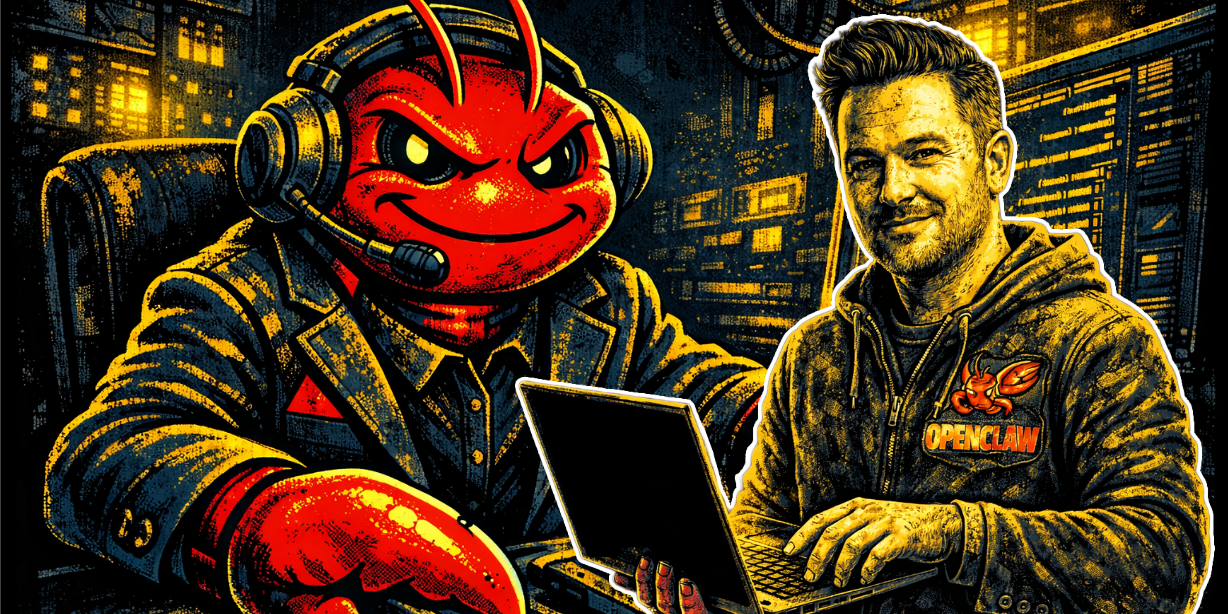
What is OpenClaw is a question business leaders are starting to ask as AI shifts from experimentation to operational reality. The pressure is familiar: teams want productivity gains, competitors are ‘doing something with AI’ and boards want clarity on risk, cost and return.
What most leaders do not want is another opaque platform that promises transformation but creates governance headaches later on. This article explains what OpenClaw is, why it is appearing in business conversations and how to think about it sensibly from a commercial and operational perspective.
Rather than focusing on tools, the aim here is to help decision-makers understand where OpenClaw fits, where it does not and how it should be evaluated alongside wider AI strategy.
What is OpenClaw?
OpenClaw is an open-source framework for building and running AI-powered workflows. It’s essentially a set of components and patterns that let a business or individual connect AI models to its/their data, systems and processes, then orchestrate how tasks get done (for example: handling requests, triggering actions, enforcing rules, logging outputs and routing work to humans when needed).
In plain English - if a “tool” is a finished app you can use today, OpenClaw is the underlying kit you use to create AI-enabled processes that fit your organisation (and keep control over how they behave).
What that typically means in practice is that OpenClaw helps:
• Define the steps in an AI process (inputs → AI decision/work → output/action)
• Connect to business systems (CRM, email, documents, databases, support platforms)
• Control and audit behaviour (permissions, logs, governance rules, escalation)
• Standardise and reuse AI workflows across teams instead of everyone “doing their own thing”
OpenClaw - A Reality Check for Business Leaders
At its core, OpenClaw is positioned as a flexible, open AI framework rather than a finished, off-the-shelf product. This distinction matters. Many businesses assume anything labelled ‘open’ is automatically cheaper, safer or easier to control. In practice, openness shifts responsibility rather than removing it.
The most common misunderstanding is thinking OpenClaw is a plug-and-play AI solution. It is not. It is better understood as a foundation that allows organisations to build, orchestrate or customise AI-driven workflows. Without structure, that flexibility can quickly become complexity.
Unstructured adoption creates real risks:
• Multiple teams experimenting without alignment
• No clear ownership of data or outputs
• Inconsistent results that are hard to measure
• Governance gaps that only appear once AI is embedded in operations
Over excitement can often dull these realities. Open frameworks can be powerful but only when there is clarity on why they are being used and what success looks like.
The AI Expert Perspective on OpenClaw for Business
OpenClaw for business exists because organisations want more control than packaged AI tools offer but without locking themselves into proprietary ecosystems. Leaders often underestimate how quickly ‘experimentation’ becomes dependency.
The mistake is assuming speed equals progress. Structured adoption consistently outperforms fast adoption because it forces prioritisation. The organisations seeing value from OpenClaw tend to follow a disciplined sequence: clarity on objectives, prioritisation of use cases, governance design and, only then, technical AI implementation.
This is why AI should be treated as an operating model decision, not an IT project. OpenClaw can support that model but it does not define it for you.
What smart organisations do differently with OpenClaw
When OpenClaw is used effectively, the difference is rarely technical sophistication. It is decision discipline.
Smart organisations:
• Define outcomes before selecting or configuring frameworks
• Limit early use cases to areas with measurable operational impact
• Treat governance and training as productivity enablers, not blockers
• Agree upfront how performance, risk, and ROI will be tracked
This restraint allows OpenClaw to remain a strategic asset rather than an experimental playground. Measurement is key - leaders should be able to answer what time is saved, where costs reduce or how decision quality improves.
Skills and malware risk — the part leaders must not ignore
OpenClaw uses ‘skills’ (plug-ins, extensions, connectors, or reusable modules) to do work across your systems. Treat those skills like you would treat software running inside your business because that’s what they are. The risk is not theoretical: a skill can be clean, poorly built, or malicious and the impact depends on what access it has.
A single compromised skill can quietly sit inside your workflows and do things you did not intend, such as copying data, changing outputs or creating a backdoor into systems, especially if it has broad permissions.
The main OpenClaw risks business leaders should understand are:
• Malicious skills or hidden code: A skill sourced from outside your organisation (or built quickly without review) can contain code that siphons data, logs sensitive inputs, or behaves normally until triggered.
• Supply-chain risk: Even if the skill started safe, it can become risky through dependency updates, maintainers changing, or unreviewed edits over time.
• Excess permissions: Skills often need access to email, files, CRM, finance data, or customer records. If you grant more access than necessary “to make it work”, you increase the blast radius of any mistake or compromise.
• Hard-to-spot behaviour: AI workflows can vary in outputs naturally, which makes subtle abuse harder to detect than in traditional systems. Problems can hide in plain sight.
• Ownership gaps: If no one is clearly accountable for each skill in production, security and performance issues become “everyone’s problem”, which usually means they become nobody’s problem.
The practical safeguard is straightforward: do not treat skills like harmless add-ons. Treat them like production software. That means clear approval, minimal permissions, logging and named owners and it starts with an AI Workshop to agree governance and operating rules before anything is rolled out. From there, controlled AI Implementation, supported by AI Training, reduces the chance that well-meaning teams create risk while trying to create speed. Our OpenClaw in a Box AI solution also negates a lot of the risks normally associated with ClawBot set up and skills.
Practical Takeaways for Business Leaders
If OpenClaw is on your radar, a few grounded principles help cut through uncertainty:
• Open frameworks increase flexibility, but also responsibility
• Value comes from orchestration and governance, not tools alone
• Early wins should be narrow, measurable, and business-led
• Training and operating standards matter as much as deployment
• AI success should be reviewed like any other investment decision
This mindset keeps control where it belongs: with leadership, not platforms.
Where to start if you want clarity, not complexity
OpenClaw can play a useful role in a modern AI estate, but only when it sits inside a clear operating framework. For most organisations, the sensible starting point is not configuration or development, but understanding readiness, risk and priority use cases.
That typically begins with an AI Readiness Assessment, followed by an AI Workshop to align leadership and teams. From there, structured AI Implementation, supported by targeted AI Training and, where required, AI Development, ensures OpenClaw supports real outcomes rather than experimentation. Framed correctly, OpenClaw becomes part of a broader set of AI Solutions designed to improve performance with discipline and control.
The organisations that win with AI are not the fastest adopters, but the most deliberate.


.png)