AI Policy Training: What Every SME Needs to Know
AI policy training is no longer something only enterprise businesses need to think about. If your team is using AI tools – and statistically, they already are – then how they use them and under what rules, matters enormously. Without a clear framework in place, the risks are real: data breaches, compliance failures and decisions made on outputs nobody has been taught to question.
.png)
Why AI Policy Training Can't Wait
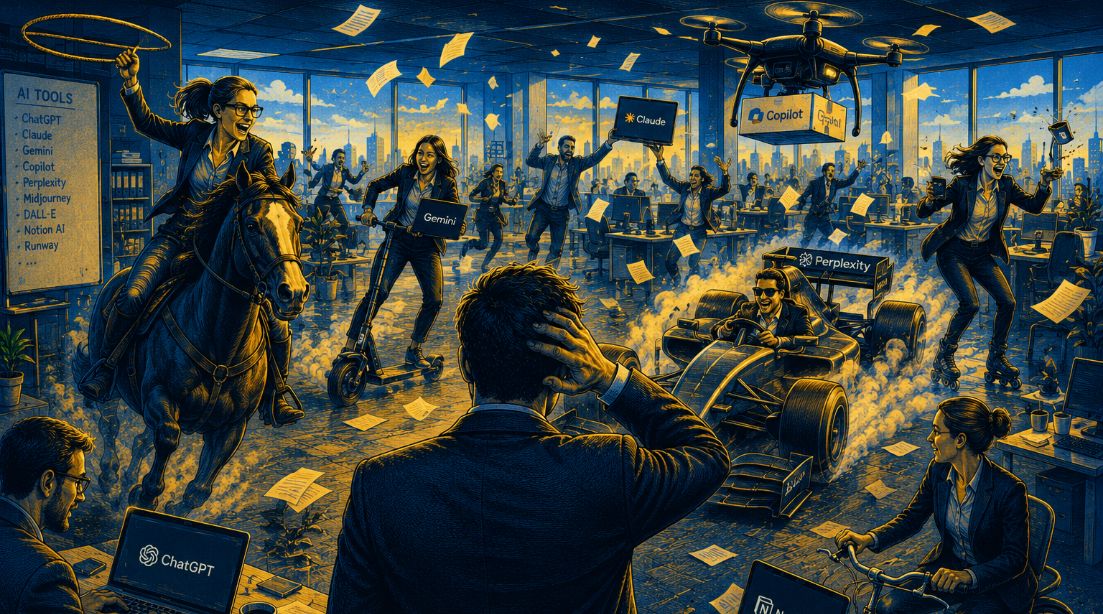
Most SMEs fall into one of two camps. Either they have banned AI use outright, which is both impractical and counterproductive or they have allowed it informally with no guidance whatsoever. Neither approach protects the business.
The numbers bear this out. According to Microsoft's 2025 Work Trend Index, 75% of knowledge workers now use AI at work and most of them are bringing their own tools in without employer knowledge. That means your data, your clients and your reputation are all at risk unless you set boundaries your team understands.
AI policy training bridges that gap. It turns abstract rules into practical behaviour, so your people know exactly what they can do, what they cannot do and why those distinctions exist.
What a Solid AI Policy for Employees Should Cover
Getting your policy right before you train on it is essential. A policy that is vague or overly technical will not stick. Your team needs something they can act on.
The Core Elements of an AI Acceptable Use Policy
An AI acceptable use policy sets out the specific conditions under which employees can use AI tools in their day-to-day work. At a minimum, it should address which tools are approved for business use, what categories of data must never be entered into a public AI system and who holds responsibility when an AI-generated output turns out to be wrong.
Beyond the basics, a strong policy will also cover how AI outputs should be reviewed before they are used, what disclosures are required when AI has contributed to client-facing work and how the business will handle any incidents where AI has been misused or has caused harm. These are not hypothetical scenarios. They are happening in businesses like yours right now.
Responsible AI Training Goes Beyond Rules
A policy document alone will not change behaviour. That is the mistake many businesses make: they write the policy, circulate it by email and consider the job done. Responsible AI training takes a different approach.
It treats the policy as a starting point, not an endpoint. Your team needs to understand the reasoning behind each rule, not just the rule itself. When people understand why certain data cannot be shared with a public large language model, they apply that principle correctly even in situations the policy did not explicitly anticipate. That is what genuine comprehension looks like and it is far more valuable than tick-box compliance.
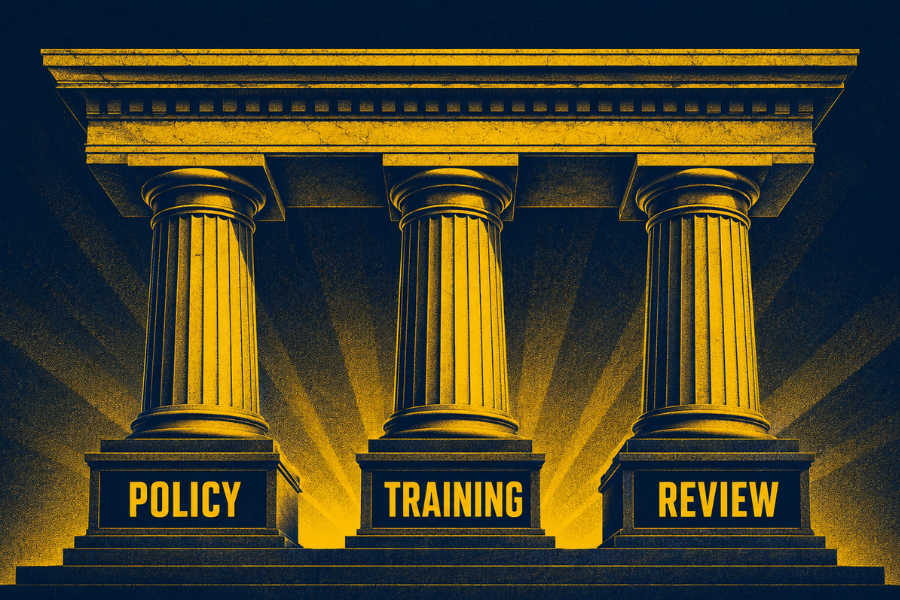
How to Structure AI Policy Training for Your Team
The structure of your training matters as much as the content. Role-specific delivery is significantly more effective than a one-size-fits-all approach. A finance manager's risks are different to those of a marketing executive, and your training should reflect that.
Role-Based Delivery
Start with a shared foundation: what AI is, how generative AI tools work at a basic level and why the risks are real rather than theoretical. From there, break into functional sessions that address the specific tools and tasks relevant to each team. This keeps the content relevant and the attention of the room.
Making Responsible AI Training Stick
Retention is the practical goal of any training programme. Use real examples from your industry. Give your team the opportunity to practise using approved AI tools within the boundaries the policy sets. Follow up with a short review session three months later to address questions that have emerged in real use.
This is the approach taken by businesses that genuinely embed AI capability, rather than those that simply go through the motions. If you want your team to use AI confidently and correctly, the training needs to feel relevant from the first session to the last.
Our AI training service is built around exactly this kind of sector-specific, commercially grounded delivery. It is not generic. It is built around your business, your tools and your risks.
What Happens When You Skip AI Policy Training
The consequences of poor AI governance are increasingly well documented. In 2023, Samsung employees inadvertently leaked confidential source code by entering it into ChatGPT. In 2024, a financial services company in the UK faced regulatory scrutiny after AI-generated customer communications went out without adequate human review.
These are not edge cases. They are the predictable result of deploying powerful tools without a framework to govern them. The UK Government's AI Opportunities Action Plan, published in January 2025, explicitly highlights the need for organisations of all sizes to develop internal AI governance capability. SMEs are not exempt from this expectation and regulators are paying closer attention.
For more on what good AI governance looks like in practice, our AI compliance service covers the regulatory landscape in detail. You may also find our piece on AI governance vs AI compliance useful context before you begin building your framework.
Where to Start If You Have Nothing in Place Yet
If your business has no AI policy and no training programme, do not let the size of the task stop you from beginning. A practical first step is understanding where your team currently stands. Our free AI readiness assessment takes around two minutes and gives you a clear picture of your AI maturity before you invest in anything else.
From there, an AI workshop can help you identify the specific areas of highest risk and highest opportunity within your operations. Many clients find that a structured AI roadmap then gives them the sequenced plan they need to move from policy to practical implementation without wasting time or budget.
Jon Rew, Managing Director at Scimitar Sports, described how the process worked for his business: 'The report highlighted things that were likely costing us money and they were. We're now implementing the AI Roadmap with a phased plan and AI Expert are supporting us every step of the way.'
Frequently Asked Questions
What should an AI policy for employees include?
An AI policy for employees should specify which tools are approved, what types of data must not be shared with public AI systems, how outputs should be reviewed before use and who is responsible when something goes wrong. It should be written in plain language that every member of the team can understand and act on.
What is responsible AI training?
Responsible AI training goes beyond handing staff a policy document. It teaches employees why the rules exist, how to apply them across real situations and how to use AI tools effectively within agreed boundaries. The goal is informed behaviour, not passive compliance.
Do SMEs need an AI acceptable use policy?
Yes. If any member of your team uses an AI tool for work purposes, an AI acceptable use policy is necessary to protect the business. Without one, you have no consistent standard for how AI is used, no record of what has been agreed and no way to demonstrate due diligence if something goes wrong.
How long does AI policy training take to put in place?
With the right support, a working policy and initial training programme can be in place within a few weeks. The exact timeline depends on your business size, the number of roles involved and how much of the groundwork has already been done. AI policy training is one of the most practical steps an SME can take to protect itself as AI use spreads through the workforce. It does not require a large budget or a dedicated HR team. It requires clear thinking, relevant content and the commitment to treat your team as capable adults who will act responsibly when they understand what is expected of them. If you are ready to build that foundation, explore our AI consulting services or get in touch to discuss what the right starting point looks like for your business.
.png)
.jpg)