AI Literacy vs AI Capability: What UK Employees Need

AI literacy vs AI capability is the difference between a team who can explain what a large language model does and a team who can put one to work before lunch. Most workplace training delivers the first and stops there. That is where the return on a training budget disappears.
The distinction has also stopped being academic. Since 2 February 2025 the EU AI Act has required providers and deployers of AI systems to ensure a sufficient level of AI literacy among staff and anyone operating AI on their behalf (European Commission).

Literacy is now the floor rather than the achievement
Article 4 reaches every organisation that provides or deploys AI, whatever the risk level of the tools involved. Businesses serving EU customers or working with European partners sit inside it, regardless of size.
That changes what a literacy programme is worth. A course ending at awareness now delivers a legal minimum and nothing commercial on top of it.
Our AI compliance work covers where that duty sits alongside UK GDPR. The EU AI Act readiness workshop deals with scope for businesses trading into Europe.
Most UK businesses have not reached the floor
ONS figures published in July 2026 show over half of employees, 55%, reporting they use AI for work or education, against around 35% of businesses with 10 or more employees reporting they use any AI technology at all (Artificial intelligence in UK businesses).
Only 11% of businesses report that more than half their workforce has received any AI-related training. Only 10% of adopters describe their AI use as extensive.
Read those figures together and they describe staff running ahead of their employers, with no shared method behind them and no record of what happens.
What AI capability looks like inside a role
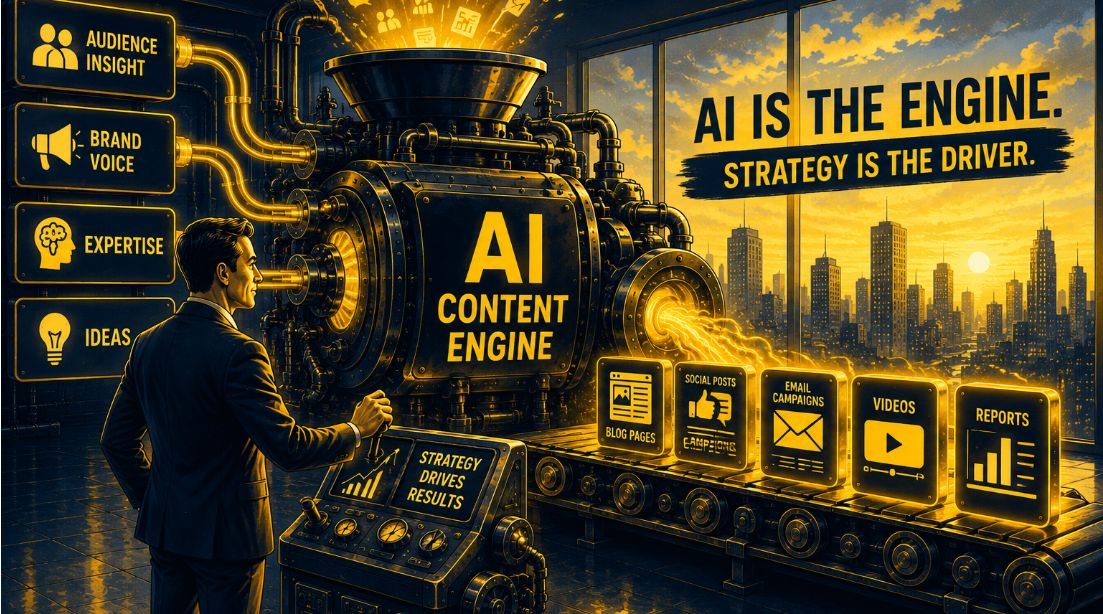
Capability is applied skill rather than technical knowledge. Nobody needs to write code. Three gaps show up in almost every team we work with.
Prompting with structure. People know they can ask AI a question. Far fewer know how to scope the task, supply the context and specify the output they need.
Evaluating output. Teams take the first answer instead of checking it for accuracy, tone and fitness for the job in front of them.
Integrating into workflow. Most use sits in one-off tasks rather than repeatable processes, which is why the time savings never compound.
McKinsey's 2025 global survey puts numbers behind that third one. Organisations seeing the most value from AI are nearly three times as likely to have fundamentally redesigned their workflows. That redesign ranks among the strongest single contributors to measurable business impact (The state of AI in 2025).

'We ran the awareness session. Are we not covered?'
Covered for Article 4, possibly, provided somebody documented it. Covered commercially, no.
The national depth data has barely moved in three years. The average adopting business runs 1.6 AI technologies, up from 1.4 in late 2023, which is what awareness without application looks like at scale.
The World Economic Forum expects 39% of workers' core skills to change by 2030, down from 44% in its 2023 edition (Future of Jobs Report 2025). Turnover at that rate dates a single awareness session inside a year.
How to build AI capability in a small team
Train two or three roles deeply
You do not need everybody at once. Pick the roles where capability converts to money fastest, which for most SMEs means sales, operations and marketing.
Depth in a few roles produces a number you can build a case on. An operations manager who takes a weekly report from three hours to forty minutes hands you the business case for the next round of training.
Results also create internal demand. Colleagues ask for the training rather than sitting through it.
Anchor training to a plan
Capability training lands better when people can see where AI fits in the business. A team building a skill for a stated purpose engage differently from a team completing a compliance exercise.
Our AI Workshop uses the Rose, Thorn, Bud method to find where capability gaps cost you most today. The AI Roadmap then gives the training a commercial anchor and a sequence.
That is how our AI training runs, sector by sector and role by role rather than one session for everyone. The same diagnose-first order runs through our AI consulting services. We set out the commercial case for moving early in why SMEs cannot afford to wait on AI training.
Frequently asked questions
What is the difference between AI literacy and AI capability?
AI literacy is understanding what AI does, where it fails and when a human needs to check it. AI capability is the applied skill to get consistent, commercially useful output from AI inside a specific role. Literacy makes adoption safe, capability makes it pay.
Does the EU AI Act require AI training for UK businesses?
Article 4 of the EU AI Act has required providers and deployers to ensure sufficient AI literacy among staff since 2 February 2025. It reaches UK businesses providing or deploying AI systems in the EU. The Act sets no prescribed format, which makes documented, proportionate training the practical response, though your specific position warrants independent legal advice.
How long does it take to build AI capability in a team?
Role-specific training built around real workflows produces measurable results in weeks rather than months. A few focused hours applied to one high-frequency task usually returns time immediately, which is what funds the next stage.
Is AI training only relevant for technical staff?
No. The largest gains usually come from sales, operations, marketing and finance roles, because those carry the repetitive work AI handles well. Familiarity with the process matters more than a technical background.
AI literacy vs AI capability decides what your training budget returns. Literacy now sits as a legal floor under the EU AI Act. Capability is the part that shows up in your numbers.
See where your team stands with our free AI readiness assessment. Two to three minutes, no obligation and a readiness score at the end.
.png)