AI Development: What It Is and What It Costs
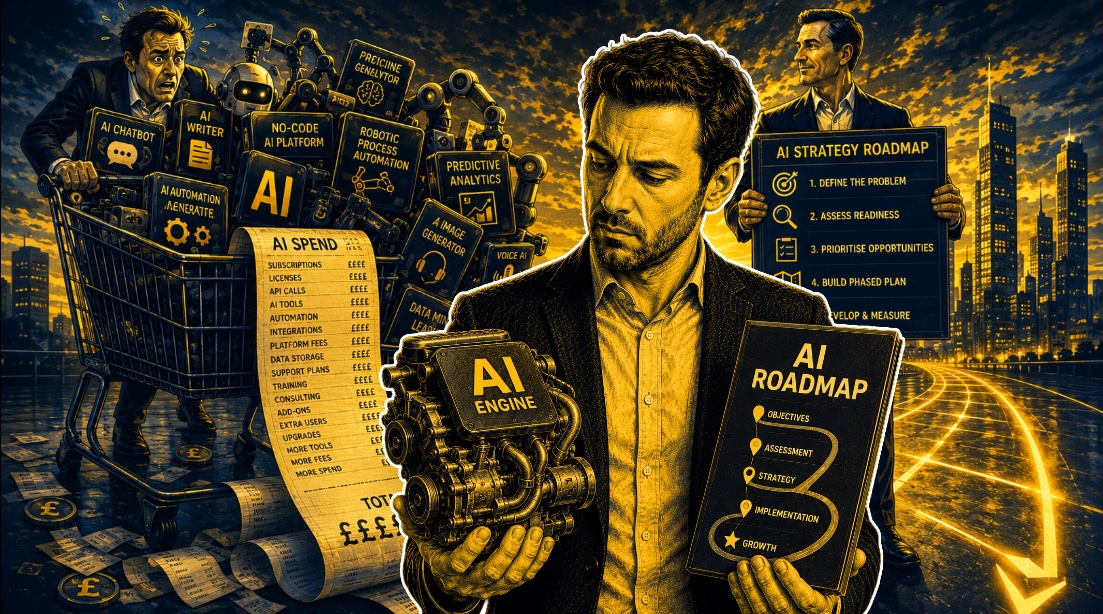
Artificial intelligence development is one of the most commercially significant decisions a small or medium-sized business can make right now. Get it right and you reduce costs, free up resource and compound operational advantage over competitors who are still hesitating. Get it wrong and you waste budget on tools nobody uses.
This guide cuts through the noise. It explains what AI development actually involves, what realistic costs look like in 2025 and 2026 and how SMEs can approach the process without overcomplicating it.
What Is Artificial Intelligence Development?
Artificial intelligence development refers to the process of designing, building, testing and deploying systems that perform tasks which would otherwise require human intelligence. That includes recognising patterns, processing language, making predictions and automating decisions based on data.
For most SMEs, this does not mean building a large language model from scratch. It means identifying which parts of your business generate repetitive, data-driven work and then selecting or configuring AI tools to handle them more efficiently. The development phase is where strategy becomes reality.
The Difference Between Off-the-Shelf AI and Custom AI Development
Off-the-shelf AI tools, such as Microsoft Copilot or ChatGPT, are ready to use with minimal configuration. They work well for general tasks like drafting content, summarising documents or answering routine queries. However, they are not built around your specific processes, data or commercial objectives.
Custom artificial intelligence development builds something tailored to your business. That might be an AI model trained on your customer data, an automation workflow connected to your existing systems or a bespoke application that handles a specific operational challenge. The trade-off is cost and time, but the return is precision and competitive differentiation.
Most SMEs benefit from a hybrid approach. You start with configuring existing tools to fit your workflows, and you build custom solutions only where the business case clearly justifies the investment.
How Much Does AI Development Cost?
This is the question most SME owners ask first, and it rarely gets a straight answer. So here is one: AI development costs vary significantly depending on scope, complexity and whether you are configuring existing platforms or building something new.
At the lower end, integrating AI tools into existing business processes, with proper configuration, workflow mapping and staff training, typically costs between £5,000 and £20,000. Mid-range custom development projects, involving data pipelines, model training and system integration, generally sit between £20,000 and £80,000. Enterprise-grade bespoke AI platforms can exceed £100,000, though this is rarely the right starting point for an SME.
What Drives AI Development Costs Up
Three factors consistently push costs higher than they need to be. The first is poor scoping. Businesses that begin AI development without a clear definition of the problem they are solving tend to expand scope mid-project, which compounds costs rapidly. The second is data readiness. If your data is unstructured, incomplete or siloed across multiple systems, significant preparation work is needed before any AI can function reliably. The third is the absence of a phased plan.
A structured AI roadmap addresses all three of these risks before development begins. It defines what you are building, what data you need, what each phase costs and what the expected return looks like. According to McKinsey's 2025 State of AI report, organisations that plan AI investment in structured phases are significantly more likely to report measurable returns within the first year.
How to Estimate ROI Before You Commit
The most commercially disciplined AI projects start with a return on investment calculation, not a technology wish list. Identify the specific process you want to improve. Quantify the current cost of that process in time, headcount or error rate. Then model what a realistic efficiency gain looks like at six, twelve and twenty-four months. If the numbers do not stack up at a conservative estimate, the project needs rescoping, not funding.
This is precisely why an AI readiness assessment is valuable before any development investment is made. It surfaces the opportunities with the strongest business case and prevents you spending on the wrong thing first.
What Does the Development Process Actually Look Like?
For SMEs approaching artificial intelligence development for the first time, the process should follow a clear sequence. You assess readiness, identify the highest-value opportunities, build a phased plan, integrate and test, then optimise.
At AI Expert, we use the LUMA methodology and our Rose, Thorn, Bud framework to structure this process. Rose identifies what is already working well and can be amplified with AI. Thorn surfaces the friction points, inefficiencies and risks. Bud reveals the emerging opportunities that AI is best placed to develop. This diagnostic approach means the development work that follows is grounded in commercial reality, not technology enthusiasm.
The AI workshop stage is where this diagnosis happens. It typically reveals inefficiencies that owners did not know existed and opportunities that were not on the original brief.
What Happens After Development
Deployment is not the finish line. AI systems require monitoring, refinement and occasional retraining as your data and business context evolve. Many organisations underinvest in this phase and find that performance degrades within months of launch. Ongoing AI optimisation support ensures that the value you built at development continues to compound over time.
Staff adoption is equally important. The best-built AI tool delivers no value if the team reverts to old habits. AI training that is embedded into the rollout, rather than bolted on afterwards, is a reliable predictor of successful adoption.
AI Compliance: What SMEs Must Not Ignore
The EU AI Act, which came into force in 2024 and is now being enforced across member states, introduces legal obligations for organisations deploying AI systems. While the UK has adopted a sector-specific approach rather than a single framework, UK businesses trading with EU customers or operating in regulated sectors face real compliance exposure. Ignoring this during the development phase creates legal and reputational risk downstream.
AI compliance considerations should be built into the project scope from the outset, not treated as an afterthought once the system is live.
Frequently Asked Questions
What is artificial intelligence development in simple terms?
It is the process of building, configuring or deploying AI systems to perform specific tasks within a business. For SMEs, this most often means automating repetitive processes, improving decision-making with data or building tools that handle customer interactions more efficiently.
How long does AI development take for a small business?
A well-scoped AI project for an SME typically delivers initial results within four to eight weeks. More complex custom builds take three to six months. Projects that skip the planning phase almost always take longer and cost more.
Do I need a large budget to start with AI development?
No. Many high-value AI improvements can be delivered through configuring existing tools and redesigning workflows, without significant custom build costs. The key is identifying the right starting point, which is exactly what a structured readiness assessment provides.
What is the biggest mistake businesses make with AI development?
Starting with the technology rather than the problem. Businesses that select an AI platform first and then look for problems it might solve consistently report lower ROI than those that begin with a specific, measurable operational challenge and work backwards to the right solution.
Start Your AI Development Journey the Right Way
Artificial intelligence development delivers real commercial returns when it is approached with clarity, structure and a genuine focus on business outcomes. The businesses that benefit most are not necessarily the ones with the largest budgets. They are the ones that defined the problem before they chose the technology.
If you are ready to explore what AI development could mean for your business, speak to the team at AI Expert. We work exclusively with UK SMEs and every engagement starts with a clear-eyed assessment of what will actually move the needle for your business.
Take our free two-minute AI Readiness Assessment and find out where to start.
%20(1).png)